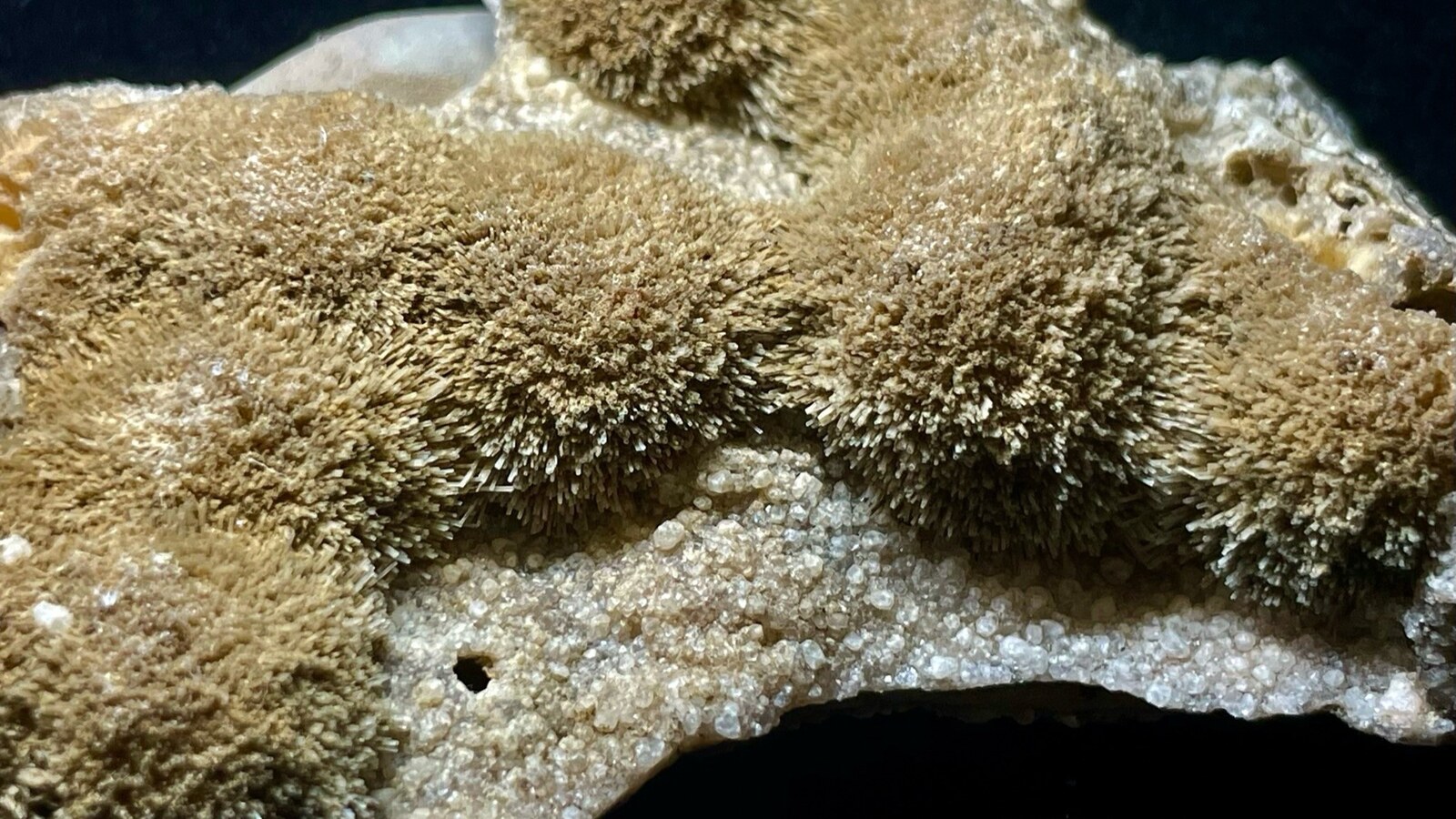
Every mineral collection contains a drawer nobody opens. Inside are good specimens — genuinely interesting pieces — with labels that read somewhere in Spain, 2019? or nothing at all. The rocks are fine. The information died.
That loss is not sentimental. A specimen with a location, a date and a few honest observations is data: it can be mapped, compared, revisited, corrected, and cited. The same specimen without them is decoration. The difference between the two is about ninety seconds of work at the outcrop.
This is what those ninety seconds should contain.
Why the record matters more than the rock
Three reasons the field record outranks the sample itself:
- Identification depends on context. A green crust on basalt near a copper deposit and a green crust in a limestone cave are different hypotheses before you have looked at either under a lens. Geology narrows the candidate list faster than colour does.
- You will be wrong sometimes, and that is recoverable — but only if you wrote things down. A wrong name attached to a good location can be fixed by anyone, years later. A right name attached to nothing can never be verified.
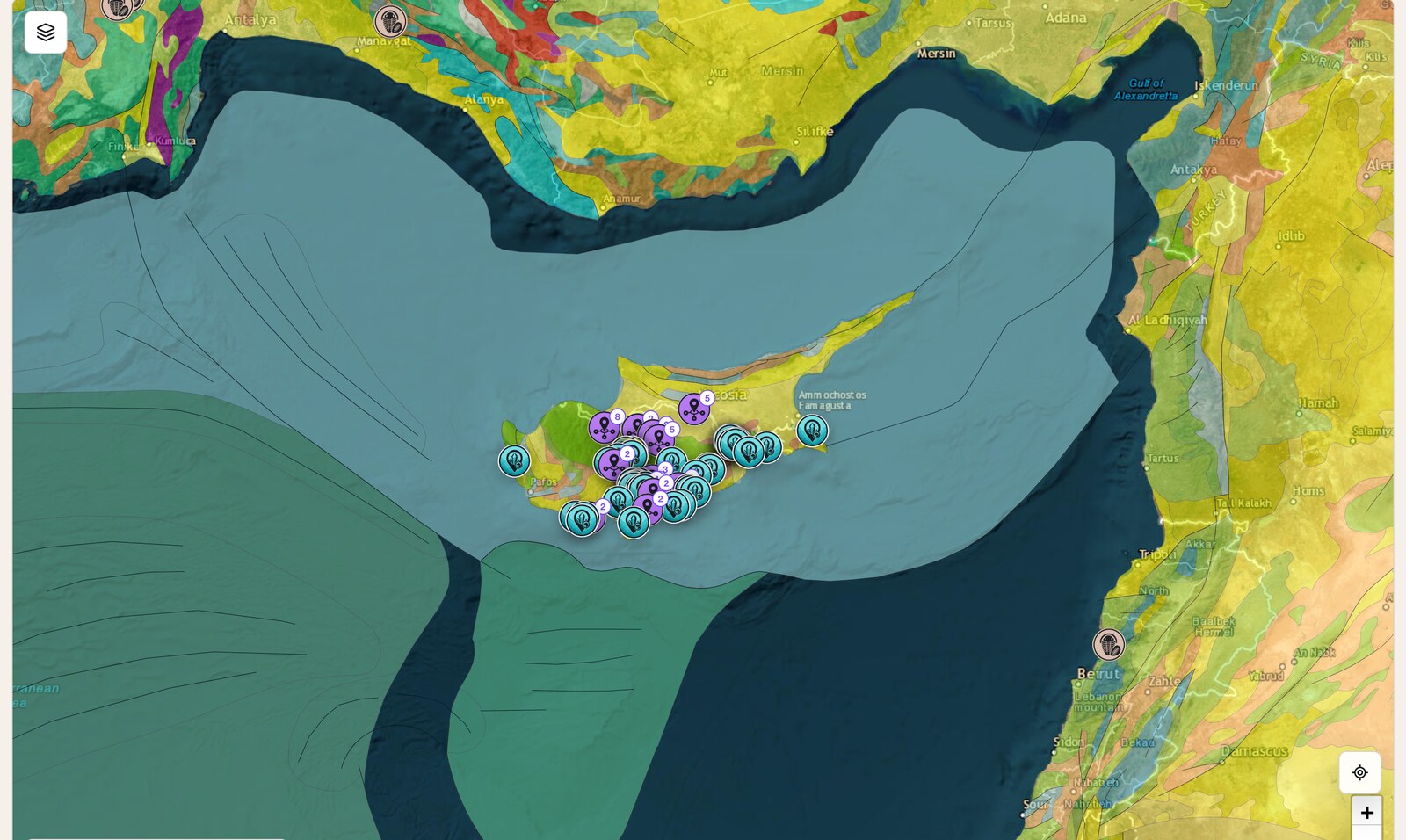
- Your observation is worth more next to other people's. One occurrence is an anecdote. Forty occurrences plotted on a map is a pattern worth investigating.
That last point is the whole argument for recording finds somewhere shared rather than in a private notebook.
The five things to record
In order of how much you will regret omitting them.
1. Photograph the specimen where it lies — then in the hand
Take the in-situ shot before you pick anything up. Once a piece is out of the outcrop, the relationship between it and the rock around it is gone forever, and that relationship is often the most diagnostic thing available.
Then photograph the specimen itself: overall shape, then close on the diagnostic surface — crystal faces, cleavage, banding, the fresh break rather than the weathered rind.
Include something for scale in at least one frame. A coin, a lens cap, your knuckle. "About this big" is not a measurement, and neither is a photograph without a reference.
2. Capture the location, and know where it came from
Location is the single field that makes everything else useful. It is also the one most often recorded badly, because phones make it look automatic.
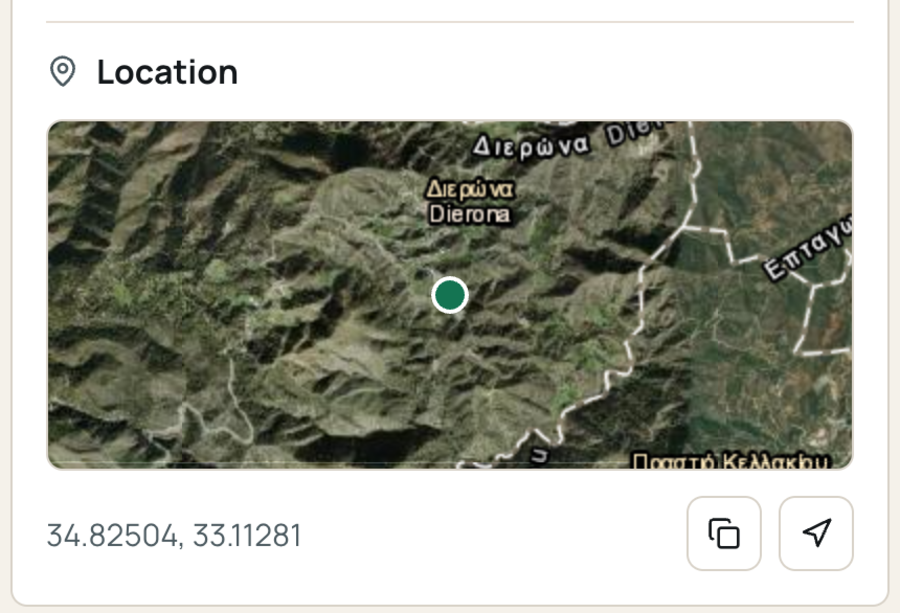
The coordinate that matters is the one captured at the outcrop, from the photograph's own EXIF data. If you import a photo later, at home, and let the app use your current position instead, "location" becomes your kitchen.
That is worse than leaving it blank. A missing coordinate is an obvious gap that anyone can see; a wrong one quietly poisons every map it appears on.
A note on precision: for a roadcut or a quarry, a coordinate is fine. For a sensitive site — a rare occurrence, private land, anywhere that would suffer from a crowd — record it accurately but publish it coarsely. Precision and publication are separate decisions.
3. Run the field tests you can actually run
You do not need a lab. Four or five simple tests eliminate most of the wrong answers, and the honest answer "not tested" is far more valuable than a guess recorded as fact.
| Test | What you need | What it tells you |
|---|---|---|
| Hardness | A fingernail (2.5), a copper coin (3.5), a steel blade (5.5), glass (5.5) | Narrows the field faster than any other single test |
| Streak | Unglazed porcelain tile | Cuts through surface weathering and staining |
| Acid reaction | Dilute HCl, or vinegar at a pinch | Separates carbonates from everything that merely looks like them |
| Magnetism | A small magnet | Catches magnetite, pyrrhotite and their company |
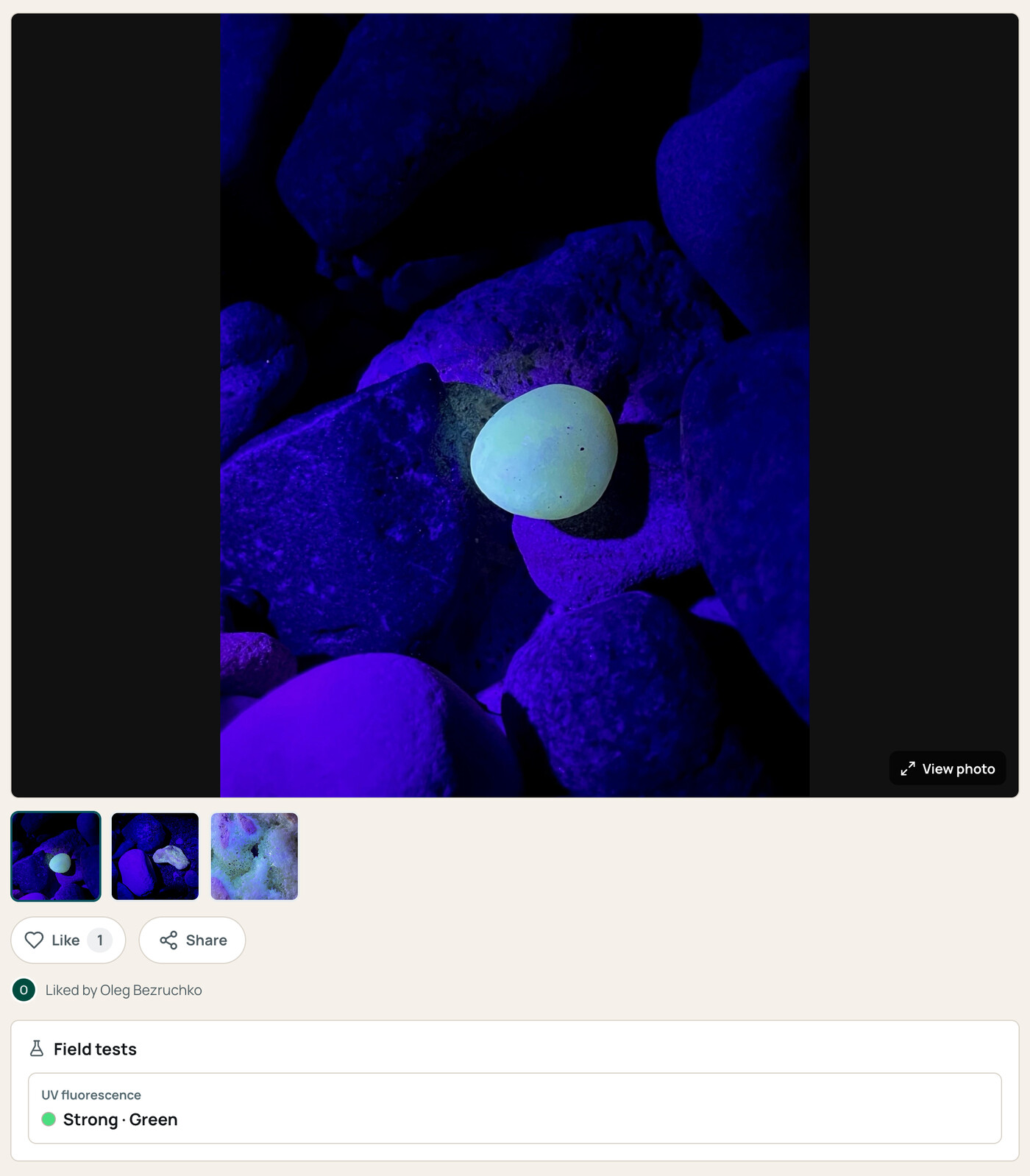
| UV fluorescence | A UV torch, after dark | Diagnostic for a handful of species, striking for several more |
4. Write the context down while you are standing in it
This is the part people skip, and it is the part that is genuinely irrecoverable. The specimen keeps its own properties. The outcrop does not follow you home.
Worth a sentence each:
- Host rock — what is it sitting in? Basalt, limestone, a vein, a vug, loose scree?
- Association — what else is there? Minerals travel in predictable company, and a neighbour often identifies a specimen faster than the specimen does.
- Form of occurrence — crust, vein fill, cavity lining, disseminated grains, loose float?
- How you found it — in place, or as float that has travelled? Float means the real source is uphill and unknown.
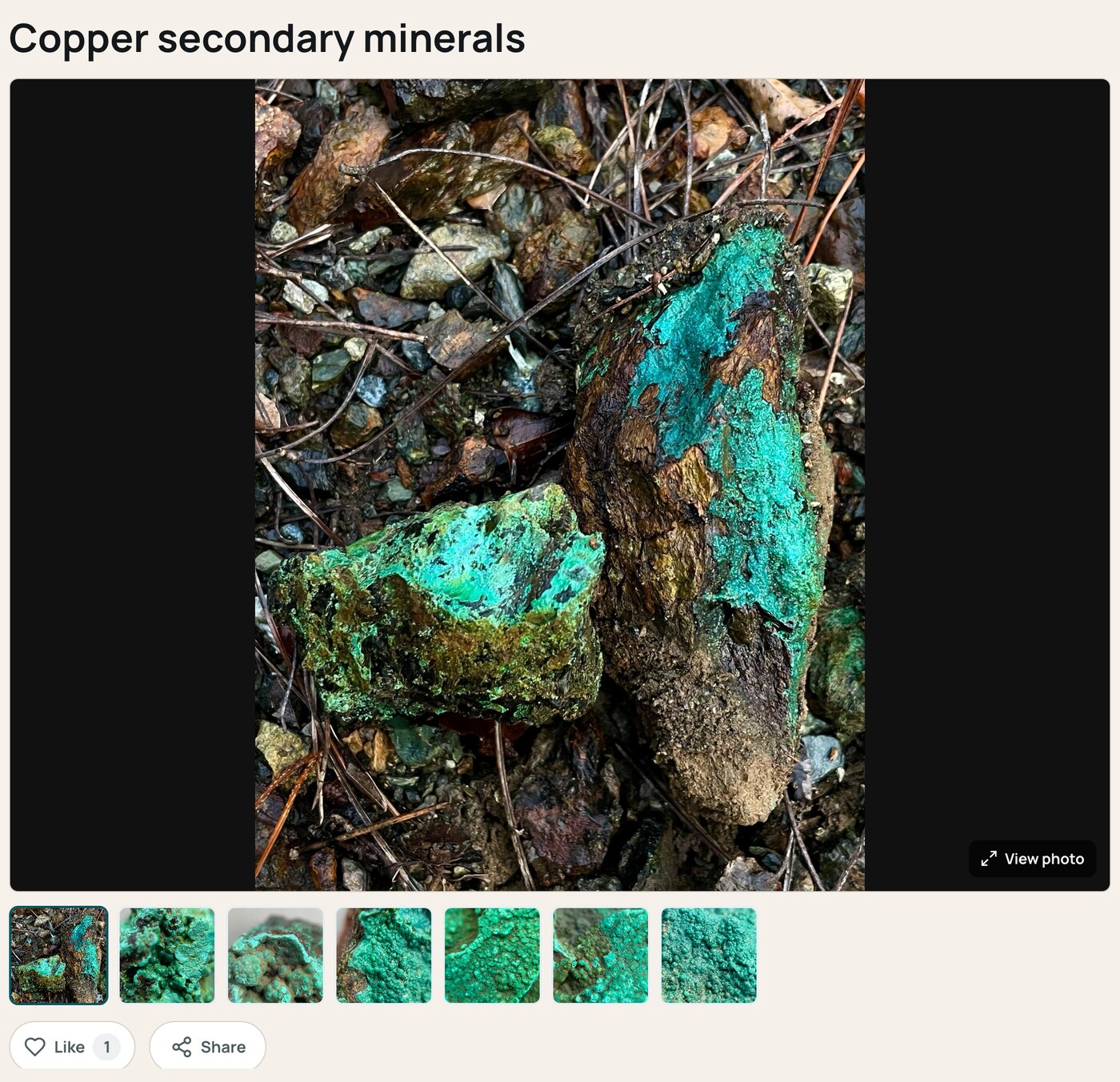
Plain language is fine. "Green botryoidal crust lining a cavity in weathered basalt, with a blue crust on the same surface" is a better field note than a confident species name.
5. Name it last, and say how sure you are
Identification is a conclusion, not an observation — which is why it comes after everything else.
Give your best reading and attach a real confidence to it. "Probably malachite, 70%" is useful. "Malachite" stated flatly, when you mean "probably", is how errors propagate into other people's data.
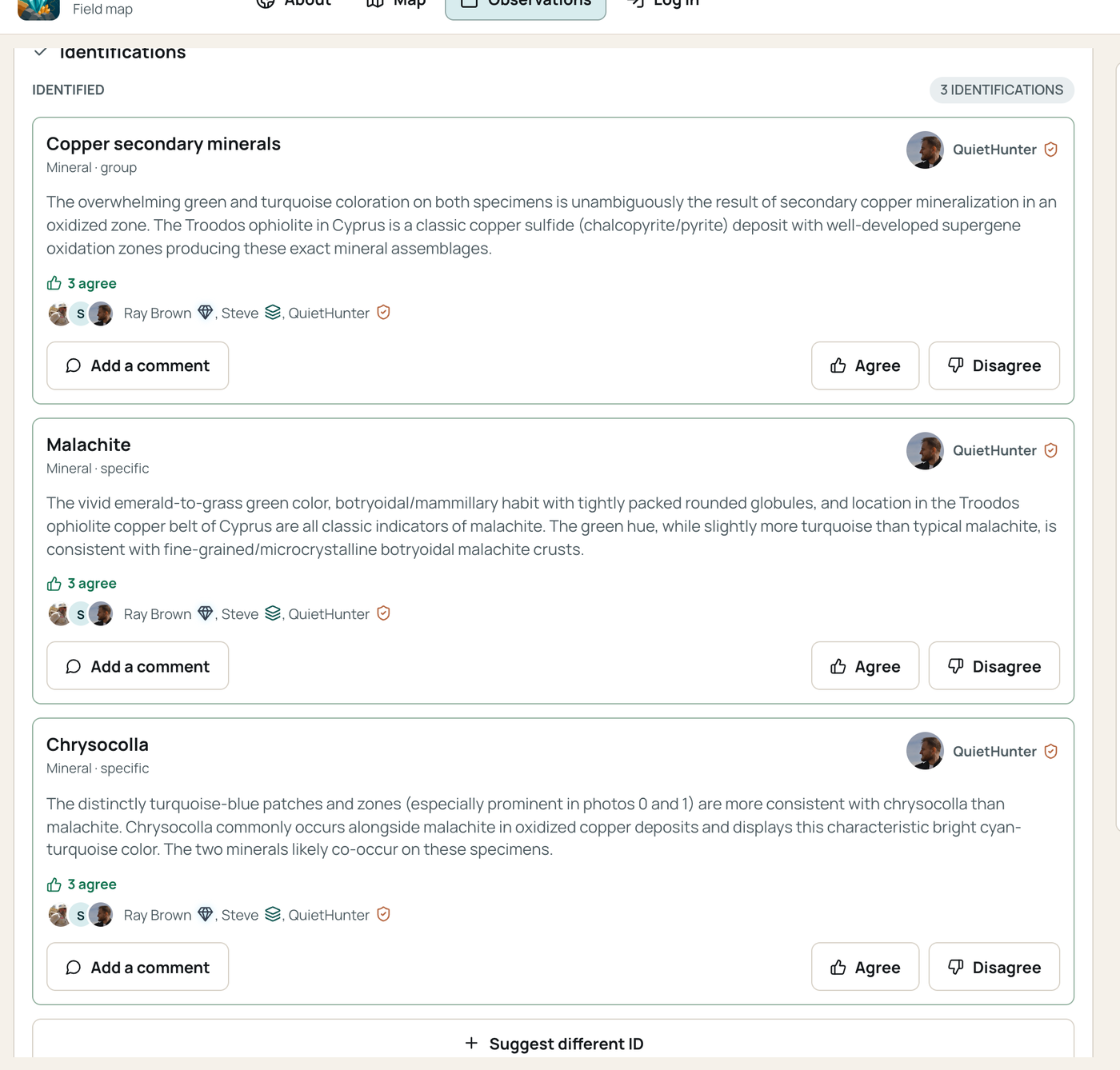
Then let other people look. A name two or three knowledgeable people have agreed with is a different kind of claim from one you made alone in the field — and the disagreements are often more instructive than the agreements.
Four mistakes worth avoiding
Photographing only the pretty face. The showy crystal is rarely the diagnostic surface. Photograph the fracture, the underside, the contact with the host rock.
Recording the identification and nothing else. If your note says azurite and stops, you have preserved your conclusion and thrown away the evidence for it. When the conclusion turns out to be wrong, nothing is left.
Letting a later import silently geotag your living room. Check the location source before saving, every time.
Waiting until you get home to write it up. You will remember less than you expect, and you will unconsciously smooth the details to fit whatever name you settled on during the drive back.
A field checklist
Everything above, compressed to something you can actually run through at the outcrop:
- [ ] In-situ photograph, before anything is moved
- [ ] Specimen photograph with a scale reference
- [ ] Close-up of the diagnostic surface, in diffuse light
- [ ] Location captured — and its source confirmed
- [ ] Hardness, streak, acid, magnet — whichever apply
- [ ] Host rock and associated minerals, in a sentence
- [ ] In place, or float?
- [ ] Best identification, with an honest confidence
Ninety seconds. Against a specimen that stays useful for decades, and might still be useful to someone else long after that.
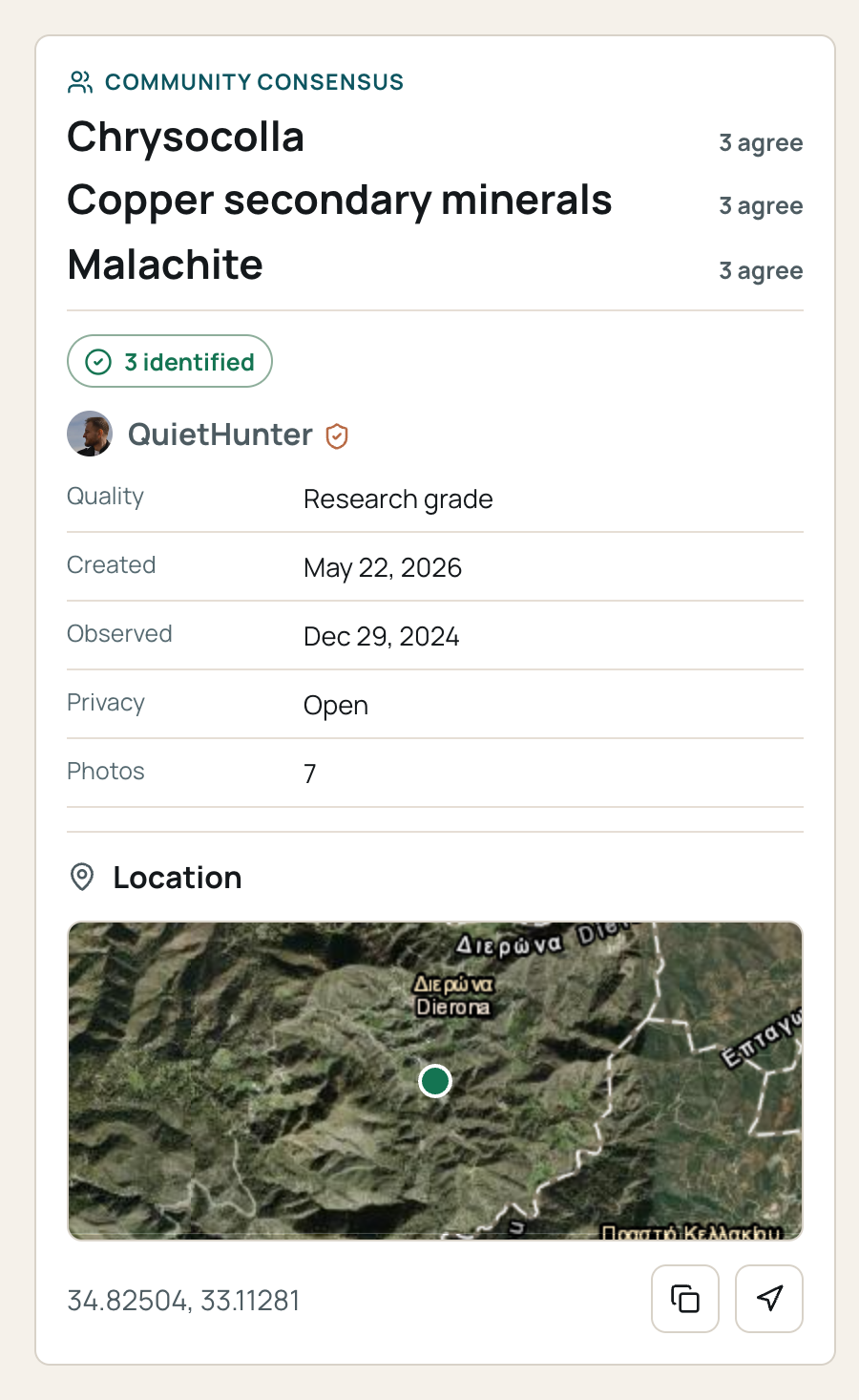
If you want to see what a finished record looks like rather than read about one, here is the copper occurrence pictured above — seven photographs, a coordinate, three identifications with their reasoning, and three people who agreed.